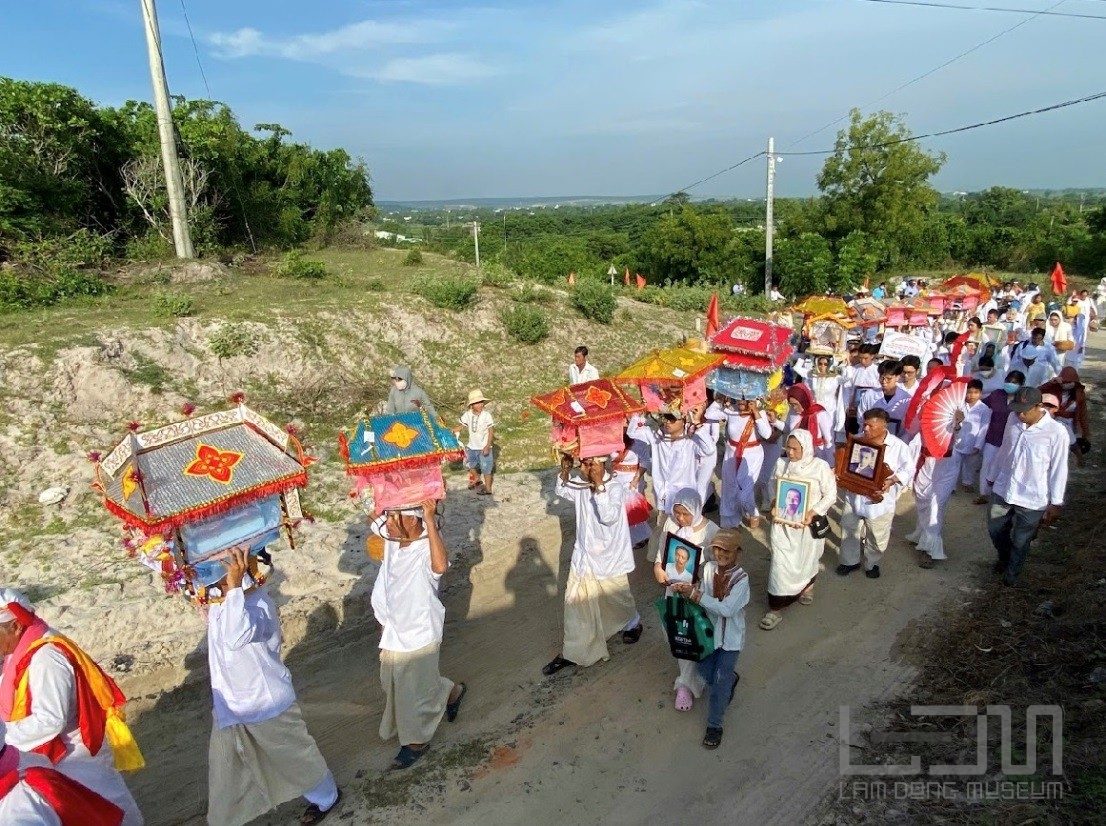
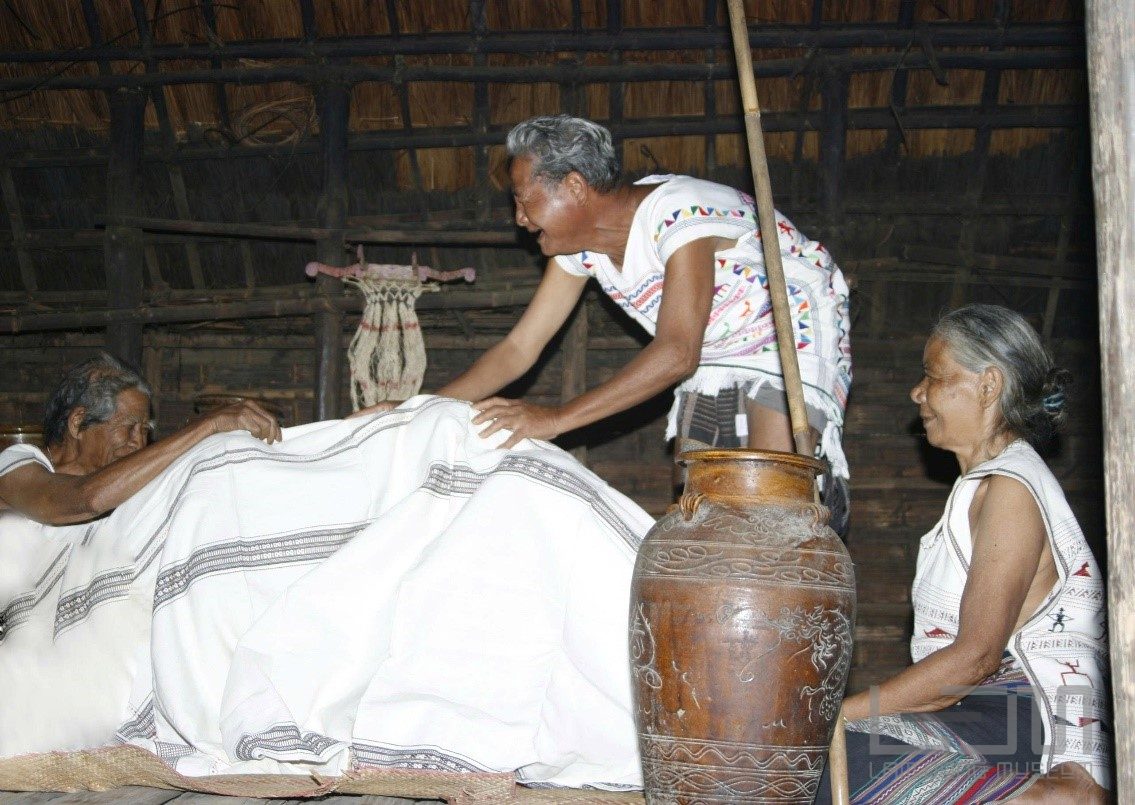
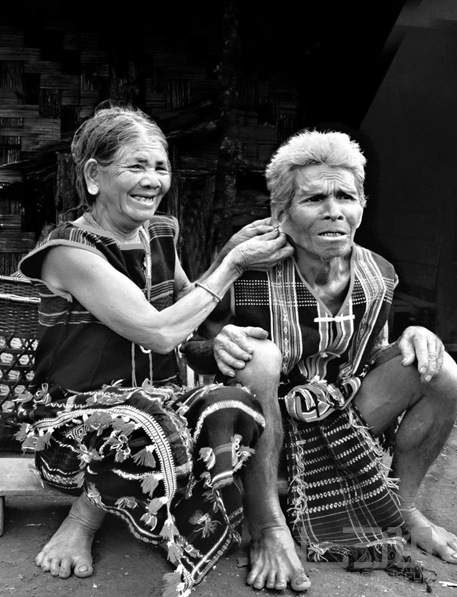
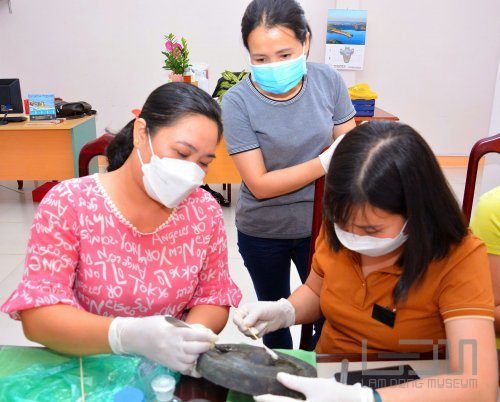
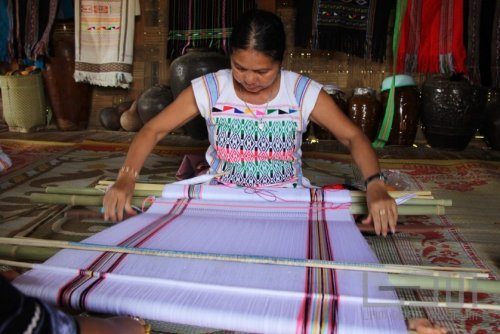
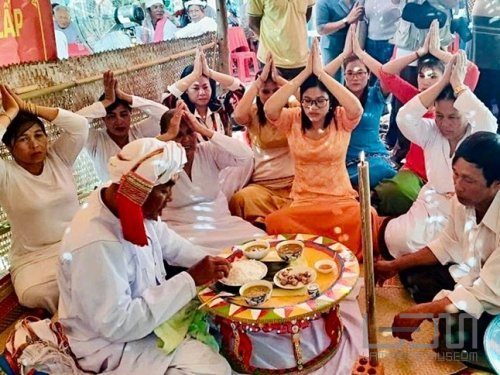
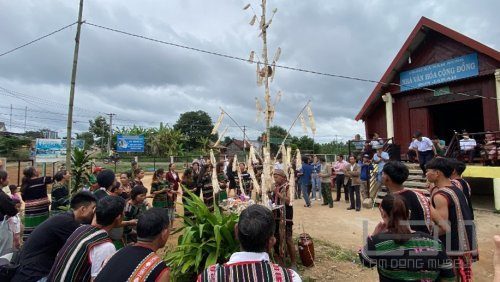
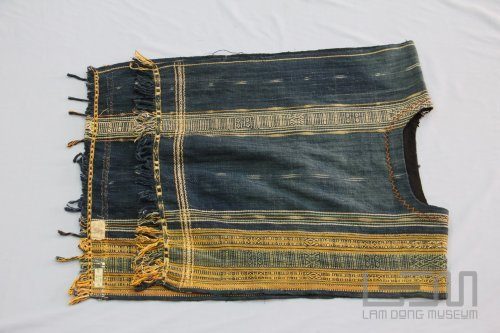
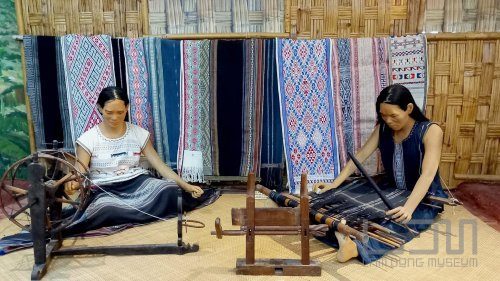
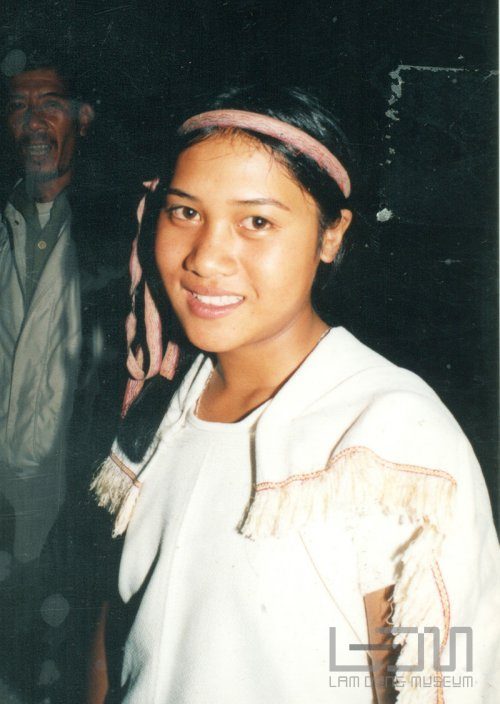
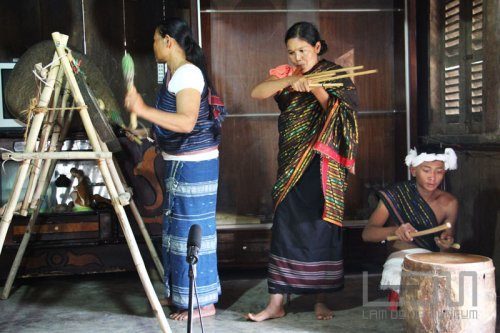
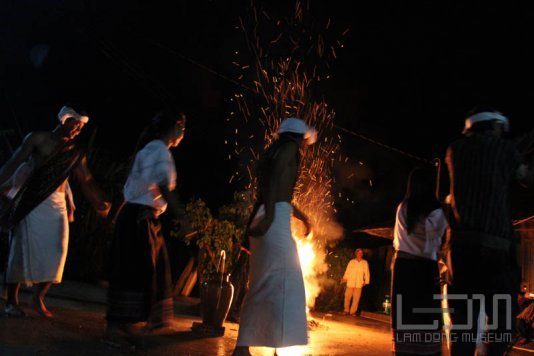
In daily life, as well as in the religious and belief activities of the Cham people from past to present, traditional handloom weaving contains many values. It not only brings income to artisans, but also provides indispensable cultural and spiritual values. Costumes, scarves, belts, life items, and products used in religious ceremonies, festivals, funerals, weddings... are all handcrafted products woven by the skillful hands and talented minds of Cham artisans.
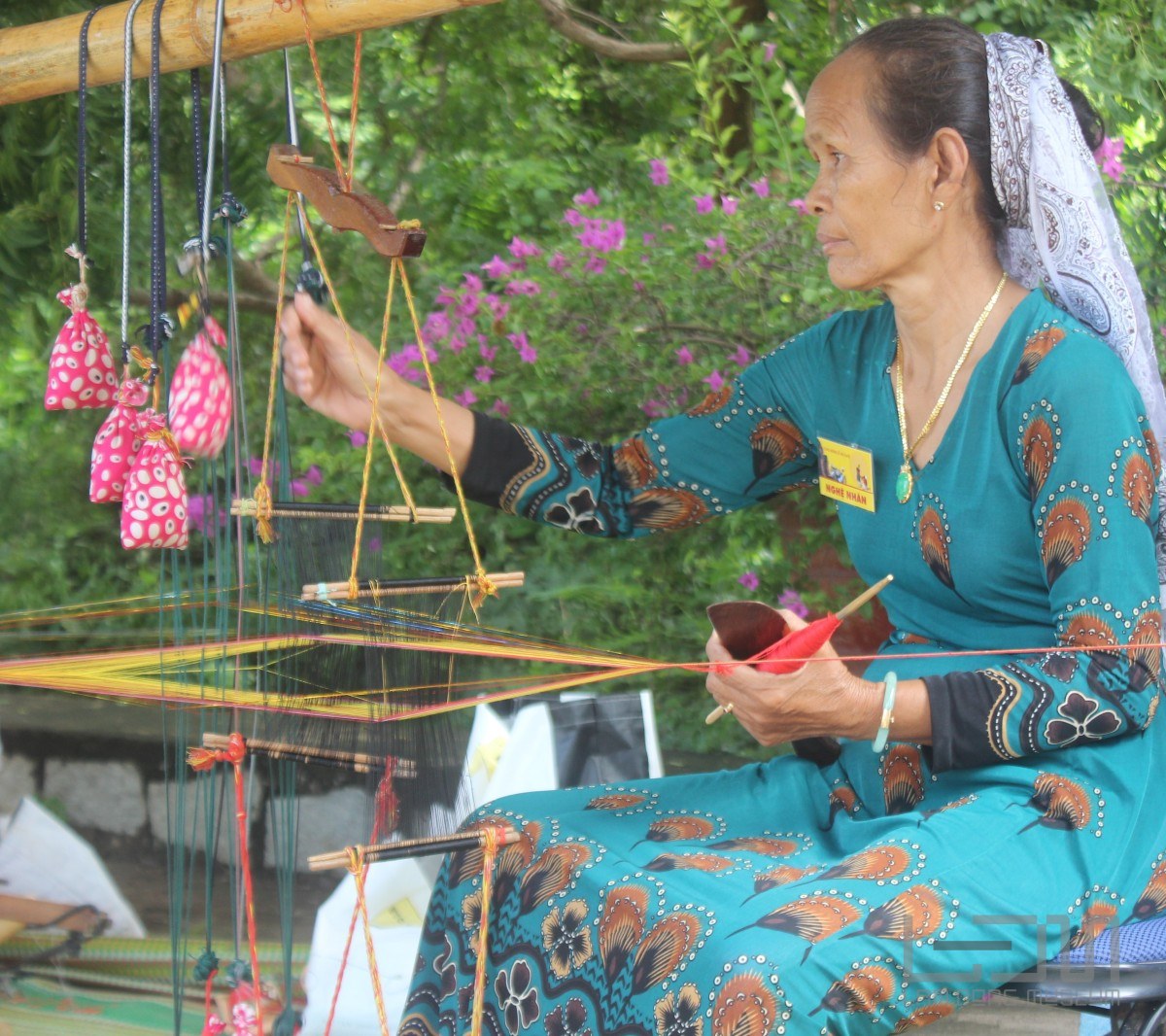
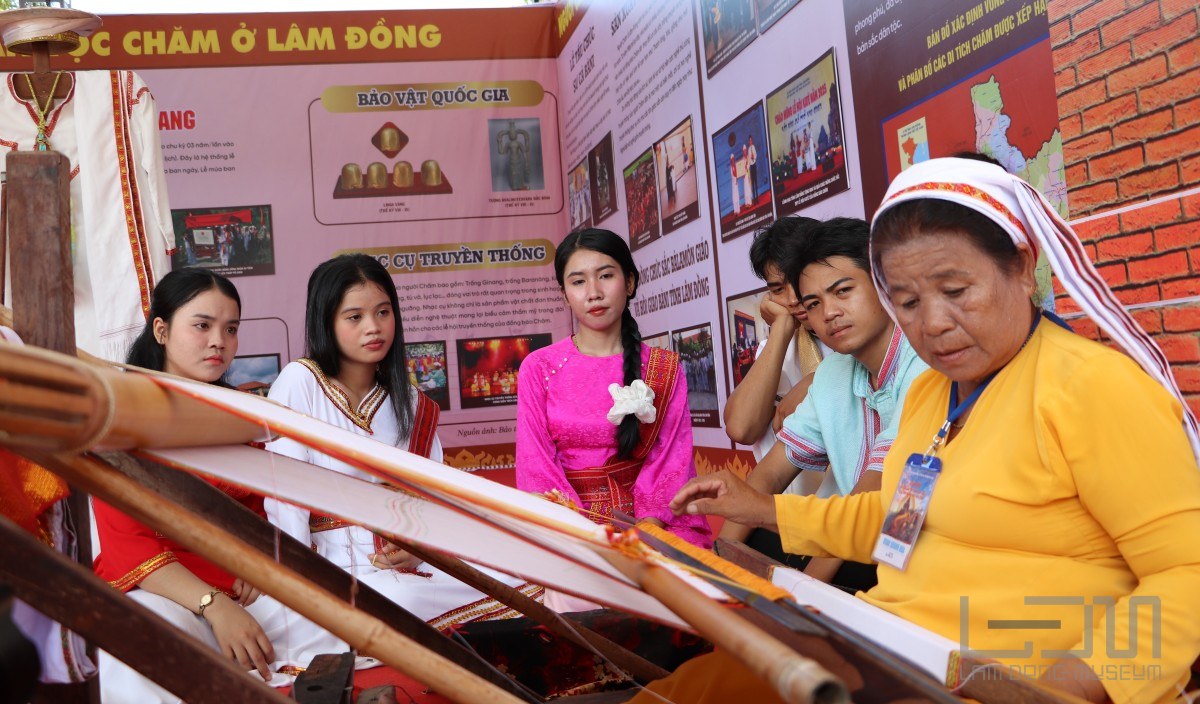
Over hundreds of years of existence, weaving is still respected, preserved and developed by the Cham community to this day. Along with sophisticated embroidery techniques, the pattern system on brocade has created aesthetic value and unique identity in Cham culture.
Patterns on traditional textile products of the Cham people in Lam Dong, in addition to their beautifying function, also carry values that represent the cultural nuances of an ethnic group. They both have typical characteristicsTraditional style, combined with cultural nuances of other ethnic communities in the process of cultural exchange and acculturation. However, depending on each person's perception, there are different views on the typical patterns on Cham brocade.
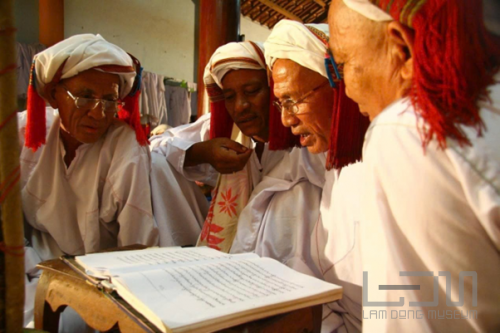
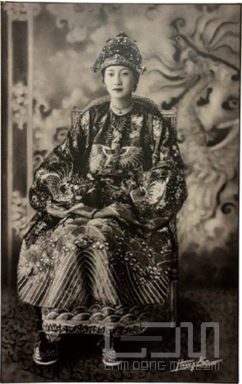
A Cham brocade product, overall, the most prominent are the two colors black and white. Black is the main color of Cham women's costumes, this is also the popular brocade background color of ethnic communities in the Central Highlands. On the black brocade background, there are absolutely no patterns, but only colored or white stripes are run to increase the aesthetics of the product. White represents the characteristic nuances of Cham textile products, especially vestments used in religion and belief, such as the costumes of monks, religious dignitaries, wedding and funeral costumes, and head scarves... Besides the two colors black and white that dominate Cham brocade, yellow and red are also widely used by Cham people.
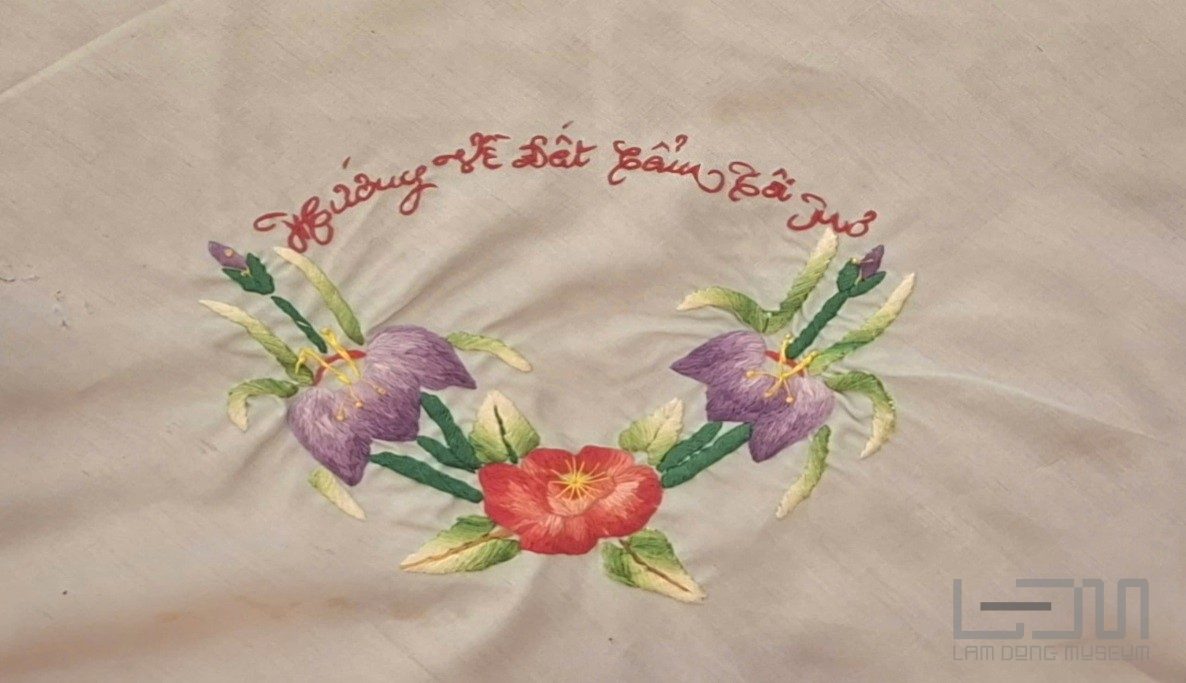
Currently, the Cham people in Lam Dong still keep about 20 flowersTraditional patterns, including plant patterns, animal patterns and some other types of patterns. Plant patterns include patterns of canarium fruit, vines, apricot blossoms, four-petal flowers... Cham people often put images of plants and flowers into textile products in stylized form. Flower petals, vines or leaf buds are transformed into soft, flexible geometric lines. The use of plant patterns reflects the close connection of agricultural residents with nature and the surrounding environment.
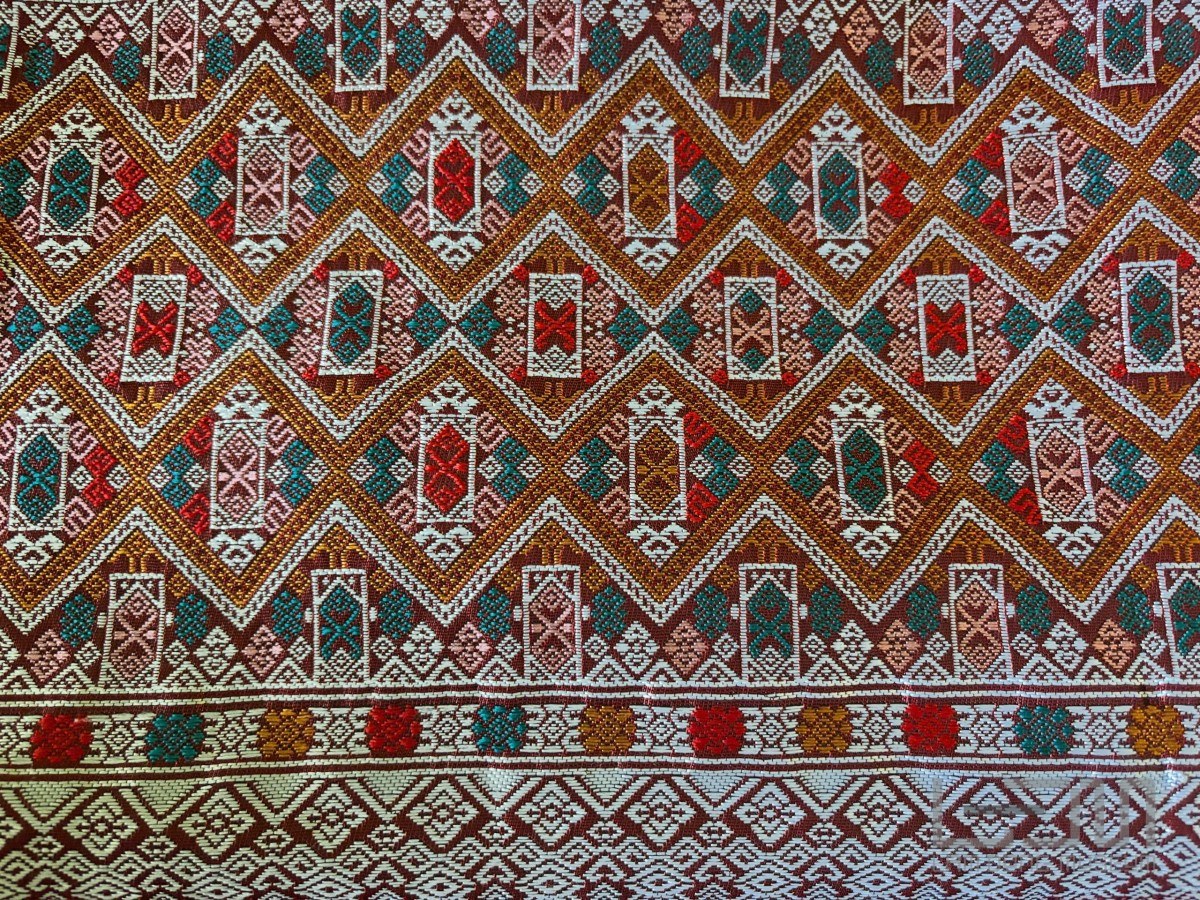
Animal patterns include patterns of chicken eyes, lizards, dog paws, makara images... Some brocade products have images of birds, animals or mascots in Cham culture. These motifs are highly stylized, not depicting reality but emphasizing symbolic meaning.
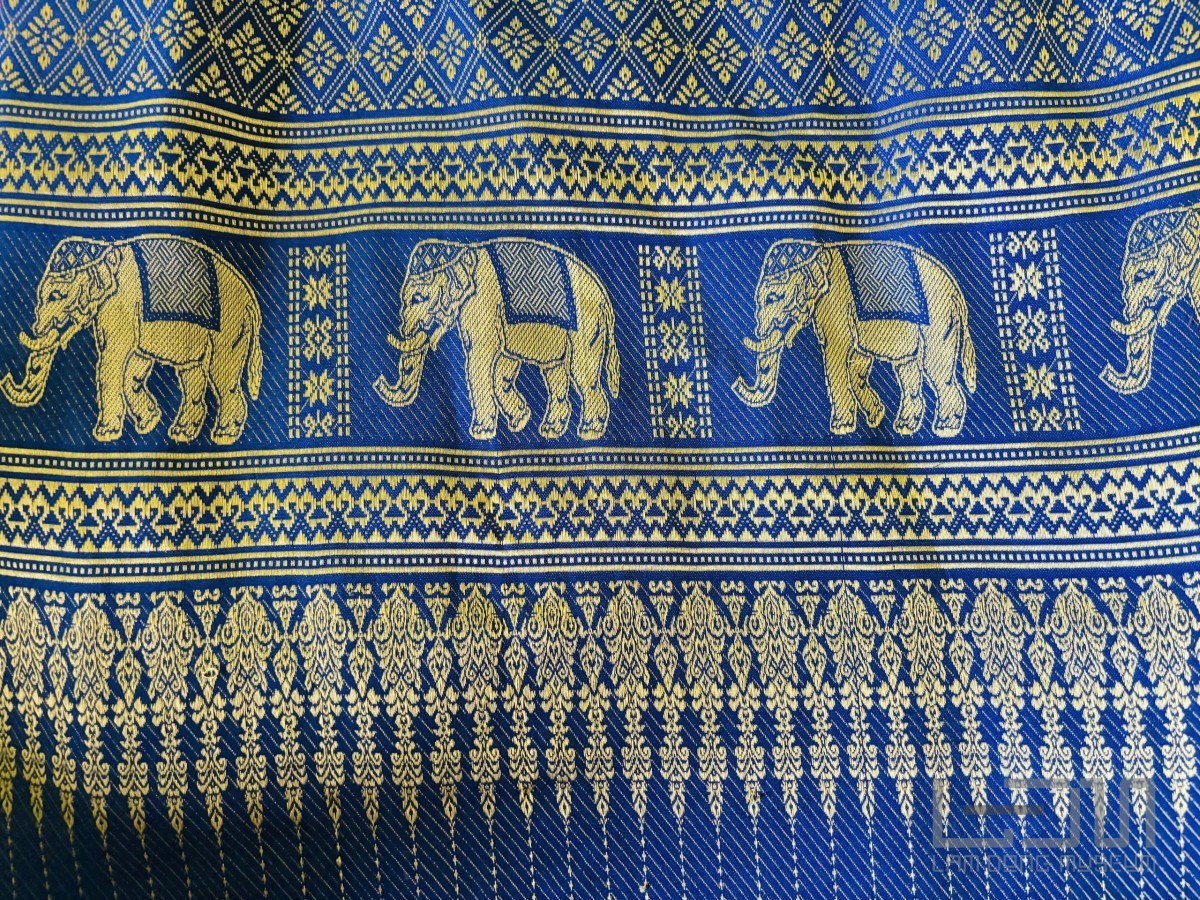
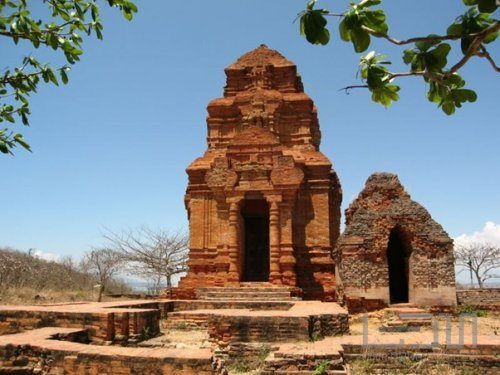
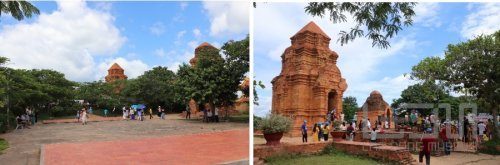
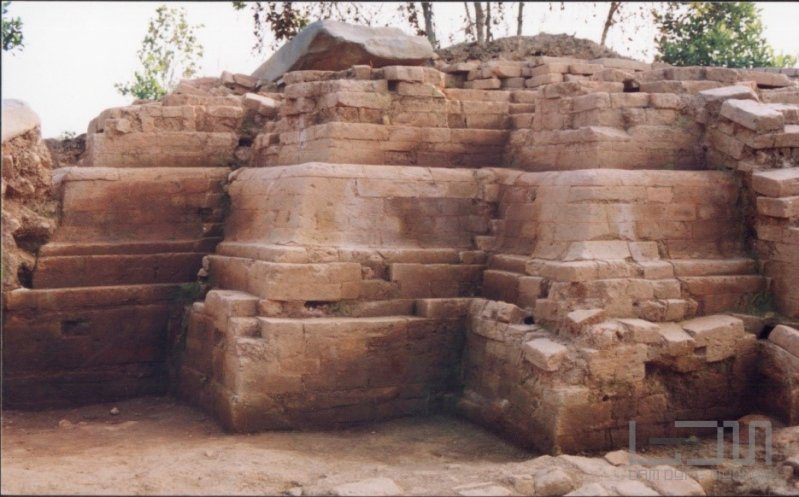
Along with the above two typical patterns, Cham textile products also have a number of other patterns, such as plain dotted patterns, box lids, mesh,Patterns combining variations, hook patterns, patterns separated by diagonal lines, vehicle road patterns... Many patterns are inspired by temple architecture, mythology and Cham folk beliefs. Some motifs bear the mark of ancient Cham art, such as the image of the god bird Garuda, lines simulating the architecture of the Cham tower... These patterns have contributed to preserving historical memories and national cultural identity on each textile product.
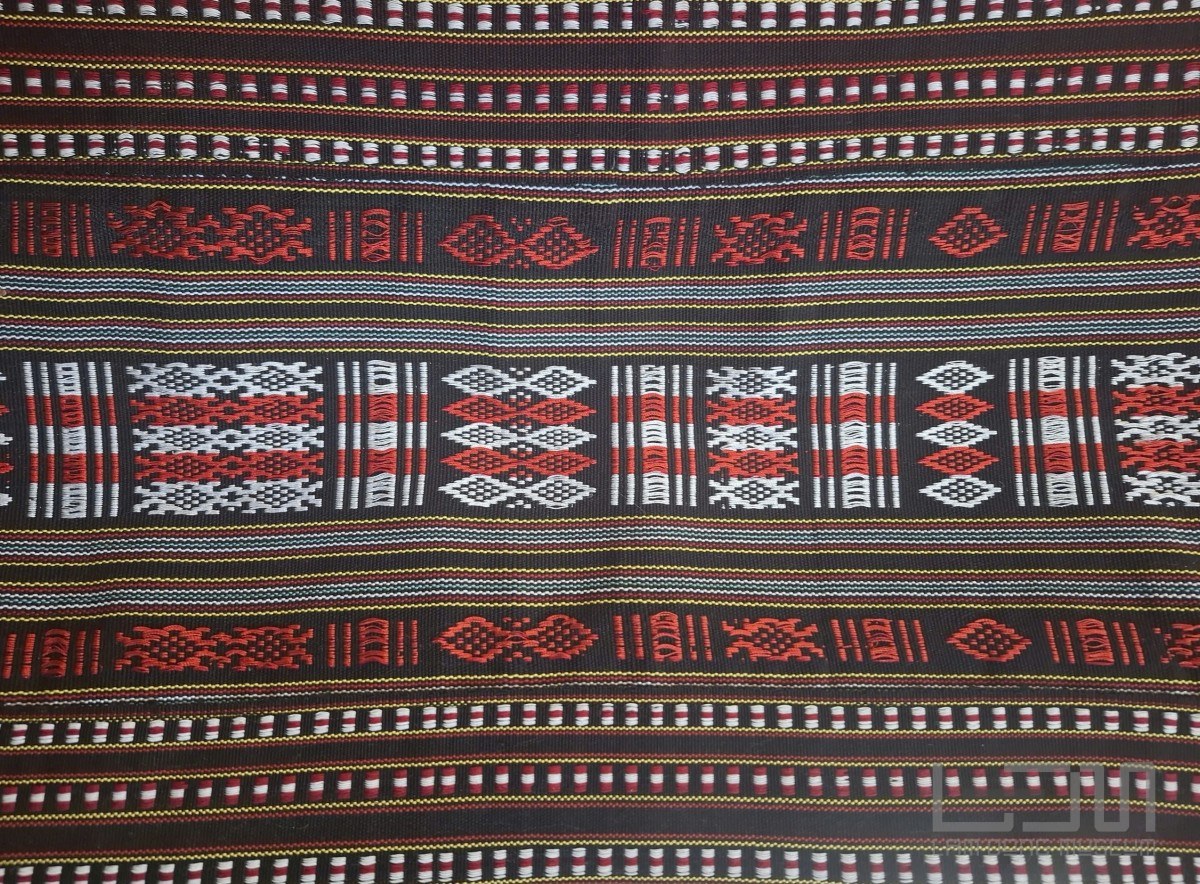
In addition to patterns, Cham people also run borders outside the patterns called "miang lines" when weaving and sewing. It is possible that sugar miang was formerly the most ancient pattern that exists to this day in the traditional weaving craft of the Cham people. It is the transition from woven brocade without patterns to brocade with shaped patterns. Borders are commonly used on Cham brocade, with the function of both adding color and limiting space for patterns. Patterns on traditional Cham textiles are often arranged in strips and distributed across the fabric surface in the warp direction. However, when sewing becomes yFor costumes, the layout of the pattern is horizontal or vertical depending on the worker's coordination. On one product motif, many different patterns or colors can be combined.
Patterns create unique beauty for textile products. The harmonious combination of color and layout helps Cham brocade have its own nuances, easily recognizable compared to brocades of other ethnic groups. In traditional society, patterns on clothes also reflect the status and role of the user. Each pattern motif contains concepts about the universe, nature and folk beliefs. Brocade patterns are a "cultural language" that reflects the history and life of the Cham people. That is why weaving has become an important element in Cham culture. Through textile products, traditional values are passed down from generation to generation, contributing to preserving national cultural identity.
Over many centuries of existence, the traditional brocade weaving craft of the Cham people is still fully preserved and passed down through generations to this day. What is special is that this is not only a traditional national profession but also a profession containing many unique cultural values.sharp.
References:
1. Inra Jaka - Cham cultural journey.
2. Ethnic Committee - Brocade weaving of the Cham people.
3. Binh Thuan Tourism Promotion Center - Cham brocade weaving village.
4. Ethnicity and Development Newspaper - The vitality of Cham brocade.