
Da Lat in the 1970s was not only a temperate resort city with bold French architectural influences, but also a convergence of the intellectual class, elites and upper-class families in the South. In the living space of classic villas amidst thousands of pine trees, the lifestyle of the residents here is a delicate blend of traditional elegance and the modernization trend of European - American style. The presence of a heat-resistant glass bowl, a product imported from the US purchased at Da Nang port and brought to use in Da Lat, is a vivid piece of objects, reflecting the modern living tastes of the upper class in the mountain town at that time.
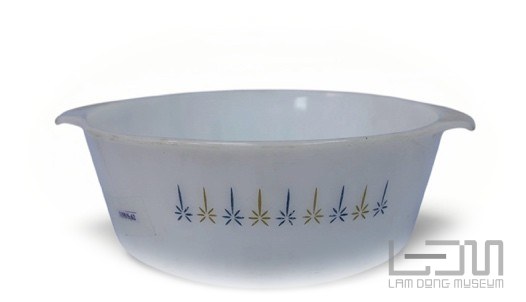
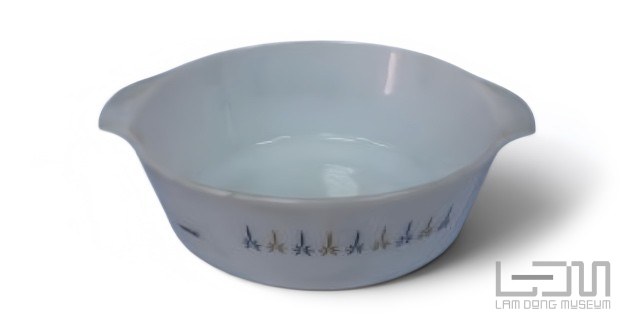
In the 1970s, Da Nang served as the second busiest seaport trading center in the South, receiving flows of high-end goods and modern household appliances from the US. A Da Lat family took the trouble to choose to buyThe bowl in Da Nang and then transported to my living space showed the meticulousness and sophistication in decorating the house and preparing tableware. For Dalat's upper class, kitchen utensils not only serve basic dietary needs, but also must meet high standards of aesthetics, versatility and express the home owner's taste.
The bowl possesses the characteristic beauty of Mid-Century Modern design style, an aesthetic trend that was very popular in mansions and villas of that period. The bowl is made from high-quality milky white translucent glass, with outstanding heat resistance and thermal shock resistance. The product represents a step forward in American household technology. The bowl is shaped like a large bowl with two slightly symmetrical protruding handles at the flat mouth, tapering to a sturdy flat bottom. Around the body of the bowl is a pattern of 18 stylized flowers in blue and gold alternating rhythmically, creating a beauty that is both minimalist, modern but still cozy.
In the context of the culinary culture of Da Lat's upper class, where family meals always value neatness and a warm atmosphere in the cold weatherIn price, the American glass bowl acts as the focal point on the dining table. With good heat retention properties and luxurious design, the bowl allows housewives to bring dishes directly from the oven or stove to the banquet table while still maintaining its aesthetics, replacing traditional ceramics that are heavy and prone to cracking.
After more than half a century, the American glass bowl from an expensive household item in the upper-class kitchen of Da Lat has now become a museum artifact with high documentary value. The artifacts not only tell the story of the circulation path of imported goods from the central seaport to the Lam Vien plateau, but also clearly portray a period of high-class living: where the comfort of American technology blends with the elegance and sophistication in the daily life of Da Lat people in the 1970s.
Huynh Dong Nghi