
In the first half of the twentieth century, streams of people from many regions migrating to Da Lat brought with them not only knowledge, occupations or living habits, but also material heritages associated with family memories and homeland cultural identity. Today, many of these artifacts are being preserved by the Lam Dong Provincial Museum, contributing to recreating a picture of the life of the community in the early stages of forming Da Lat urban area on the Lam Vien plateau. One of the typical artifacts is the Copper Teapot in the "Old Da Lat" collection.
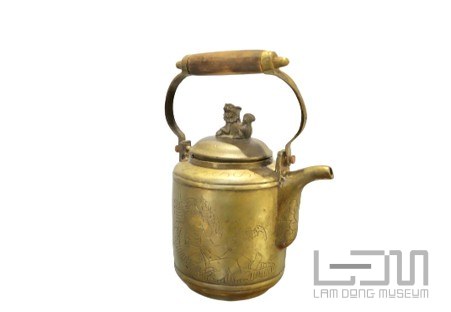
In the 1940s, this copper teapot was brought by a family migrating from the Central region when they came to Da Lat. The journey of the artifact reflects a remarkable slice of history in the process of forming the urban community in the highlands, when many well-off families in the past chose Da Lat as a place to establish a new business. The household items they bring with them are not only to serve daily life, but also contribute to preserving cultural values.transforming traditions in a new living environment.
After decades of being kept in the families of Da Lat residents, around the 1990s, the artifact was transferred to collector Nguyen Duc Hai in Bao Loc, Lam Dong. By 2023, Lam Dong Provincial Museum will buy back the artifacts and put them into the collection of "Old Da Lat", to serve research, conservation and introduce to the public the life of Da Lat residents in a bygone era.
This teapot is a household product, used to boil water and make tea, and was quite popular in well-off families in the first half of the twentieth century. The copper kettle, crafted using traditional manual methods, can be placed directly on the stove to boil water and at the same time used to make tea or brew tea. Over a long period of use, the metal surface has a natural oxidation layer with a characteristic golden brown color, creating a mark of time while still ensuring the integrity of the overall object.
The kettle's body is cylindrical, height is about 20cm, bottom diameter is 10cm, capacity is suitable for daily tea drinking needs.family. The component parts are designed in harmony, showing a reasonable calculation between function and aesthetics. The mouth of the faucet is at the same level as the neck, helping the water flow steadily when pouring and limiting overflow when boiling. The high handle with insulated wooden handle is a suitable technical solution when placed on a charcoal or wood stove. The lid of the kettle is rounded, the mouth of the lid matches the neck of the kettle, and in the middle of the lid there is a handle shaped like a Nghe. The bottom of the kettle is flat, the center of the bottom is engraved with a Chinese seal, a valuable detail when researching the origin of manufacturing as well as traditional bronze production facilities in the early 20th century.
The Nghe symbol shaped on the pot lid is a unique decorative detail, increasing the artistic value and cultural depth of the artifact. In traditional Vietnamese art, Nghe is a familiar mascot, combining the characteristics of a lion and a mascot in folk beliefs. Unlike the image of the Lion, which often symbolizes strength and authority, Nghe has an elegant, friendly appearance and is considered a symbol of loyalty and protection, and has the meaning of protecting and repelling unwanted things.sewing.
The creation of a Nghe image on the lid not only contributes to perfecting the aesthetic value of the kettle, but also reflects the traditional concept of incorporating auspicious symbols into everyday living items. Placed at the highest position of the artifact, the image of Nghe not only creates a highlight in the overall composition, but also conveys the wish for peace, luck and happiness for the family. Thereby showing that, in traditional Vietnamese aesthetic thinking, functional elements and symbolic values are always harmoniously combined, creating beauty rich in cultural meaning.
The artifact also clearly demonstrates traditional aesthetic thinking through decorative art on the copper surface. The motifs are made using the engraving technique, creating soft lines but still decisive and clear. The warm shoulder is decorated with a continuous S-shaped strip, a familiar motif in Asian folk art, contributing to creating a sense of rhythmic movement for the entire object.
The most prominent artistic highlight lies in the body of the kettle with the figurestatue "Baby holding carp in lotus pond". This is a decorative project with many layers of symbolic meaning in traditional Vietnamese culture. The image of a carp is often associated with the will to succeed (the carp crosses the gate), prosperity and success, while the lotus symbolizes purity and nobility, and the bat symbolizes "happiness". The combination of these images reflects the good wishes for a full, peaceful and happy life of Vietnamese people in daily life. Through this, it can be seen that even seemingly simple household items contain many cultural messages and profound spiritual values.
From a cultural perspective, the Bronze Teapot artifact is a vivid testament to tea drinking culture, a beauty that has long been associated with the spiritual life of Vietnamese people. In traditional activities, tea cups are present in daily life, and are also a means to receive guests, connect social relationships and show each family's hospitality. For residents of Da Lat, where the climate is cool all year round, heat-retaining kettles like this artifact become even more suitable. In the context of the early twentieth century, kettlesCopper often appears in well-off families, meeting both usage needs and showing appreciation for valuable and durable items.
With the passage of time, the development of science and technology with the birth of many modern household appliances, traditional copper kettles gradually disappear in daily life. However, the value of the artifact is not lost. From a familiar household item, the kettle has become a physical memory of a historical period, preserved by many families as a souvenir associated with tradition. The artifacts still retain in them vivid stories about the lifestyle, customs and settlement journey of generations of Da Lat residents.
Lam Dong Provincial Museum's collection, preservation and introduction of Bronze Teapot artifacts is important for heritage research and education. Not only does it reflect the handcrafted bronze crafting techniques of the early 20th century, the artifacts are also a valuable source of documents to help identify the process of cultural exchange, the adaptation of the immigrant community and the formation of the unique cultural identity of Da Nang urban area.Lat. Through artifacts, the public has the opportunity to get closer to the historical and cultural values preserved in the lives of previous generations of residents. From there, we can further appreciate the heritage that has contributed to creating the rich cultural appearance of Lam Dong today.
Hoang Hien