
Incense burner (also known as altar, altar) is one of the important and sacred spiritual items in traditional Vietnamese culture. For thousands of years, the incense burner is not simply a piece of furniture, but has become a symbol connecting the real world of descendants and the spiritual world of ancestors, gods and Buddhas. In the worship space at home, pagoda or family church, the incense burner always occupies the most solemn position, deeply reflecting the age-old principle "When drinking water, remember the source".
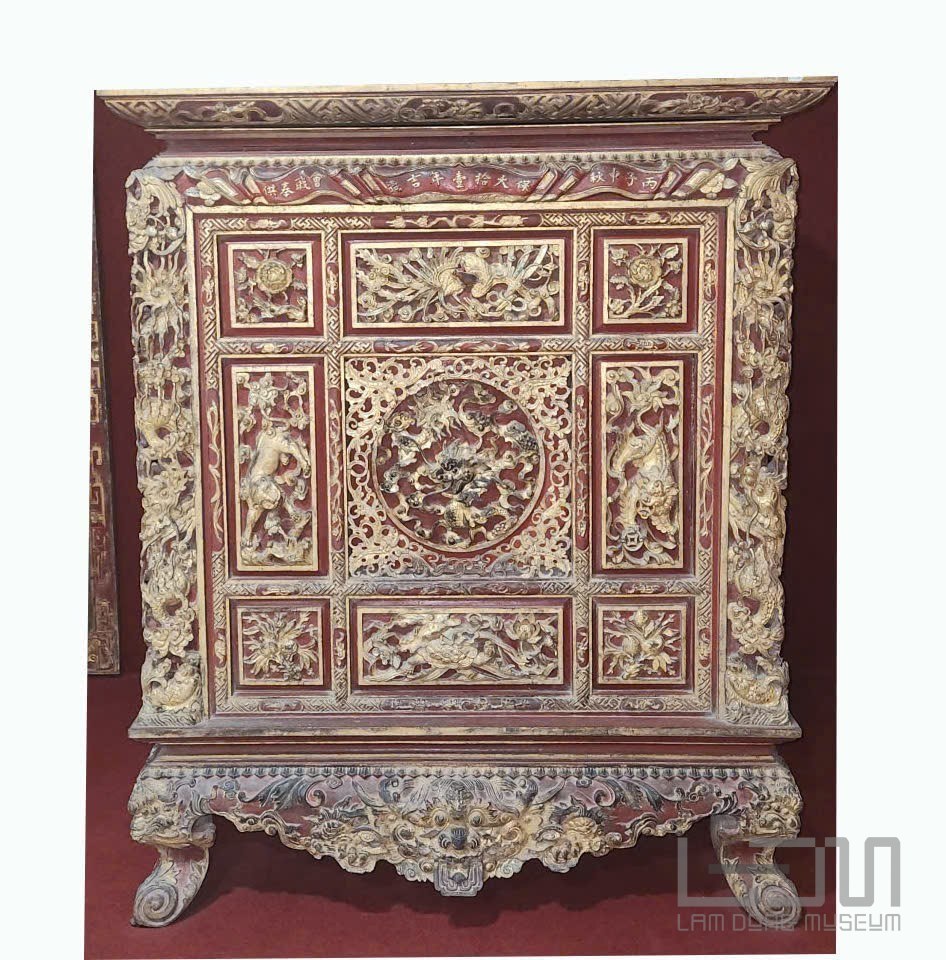
At the Binh Thuan Museum facility (No. 04, Ba Trieu Street, Phan Thiet Ward, Lam Dong Province), on display is an incense burner awarded by the Department of Culture and Information of Phan Thiet City in 1994. This is an item used for worship in the communal house of the people of Duc Nghia Ward, Phan Thiet City (formerly), donated by the Nghia Trung Association.
The incense burner is crafted from precious wood, divided into parts. 4 parts: face, body, bib and foot of incense burner. This can be considered a handmade work of art, with componentsThe structure is decorated with symbols and mascots representing the intersection of Buddhism, Taoism and Confucianism.
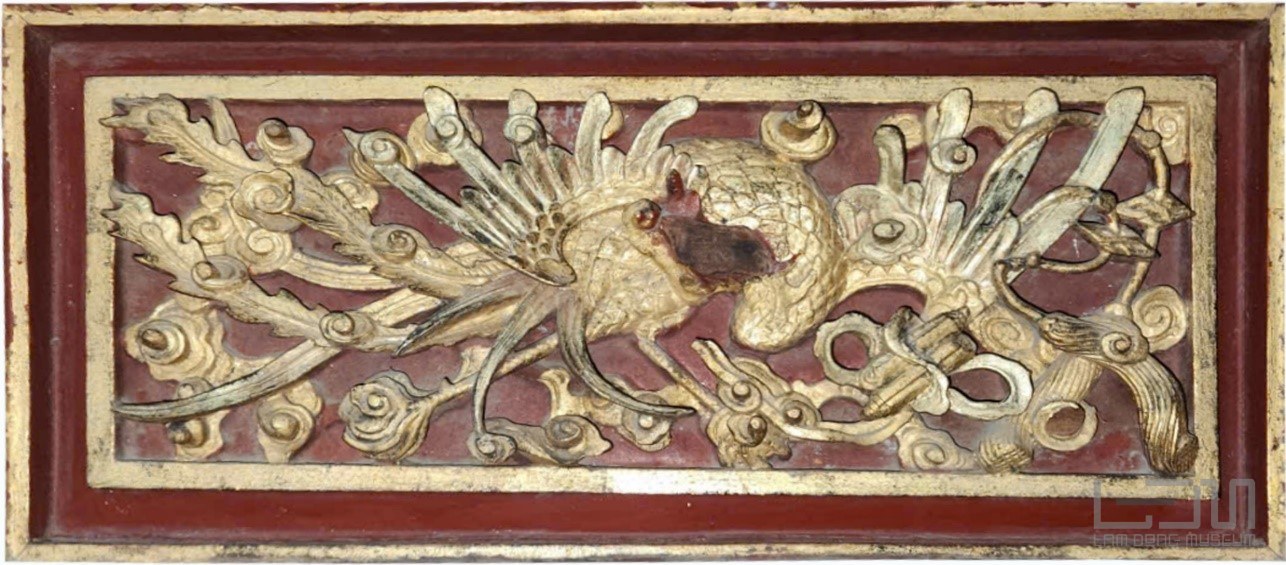
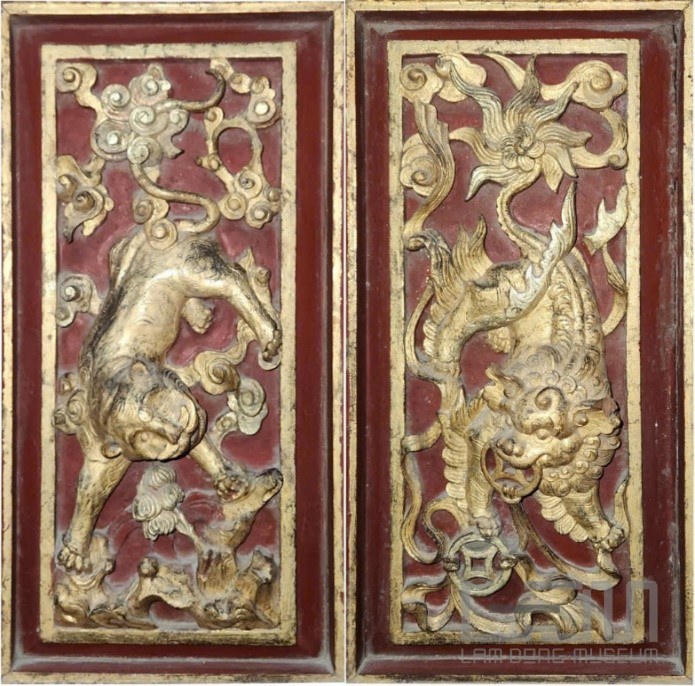
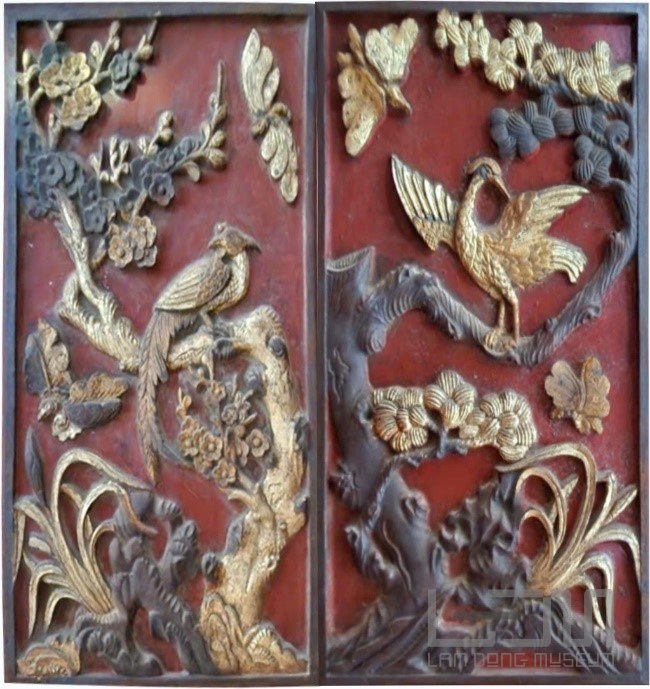
The top of the incense burner is flat, a place for worshiping objects. The body of the incense burner (front and two sides) is decorated with "eight treasures" (eight precious objects): swastika, gourd vase, dustpan, lute, fan, scroll, pen, sword. The main side of the incense burner is decorated with many beautiful patterns: dragons, unicorns, tortoises, phoenixes, tigers, chrysanthemums, peaches, with special highlights on both sides of the pillars representing the theme "carp turns into a dragon". The two sides of the incense burner's body are decorated more lightly with themes of squirrels and bunches of grapes, bamboo, chrysanthemums, apricot trees, cranes, and pheasants. The back of the incense burner is not decorated.
Above the body of the incense burner, there are 3 lines of Chinese characters engraved, from right:
“丙 子 仲 秋 - 保 大 拾 壹 年 吉 造”
Transcription:
“Binh Ty ky thu - Bao Dai 10 years of good fortune created";
Translation: Created in August of the Year of the Rat, the 11th year of Bao Dai (1936).
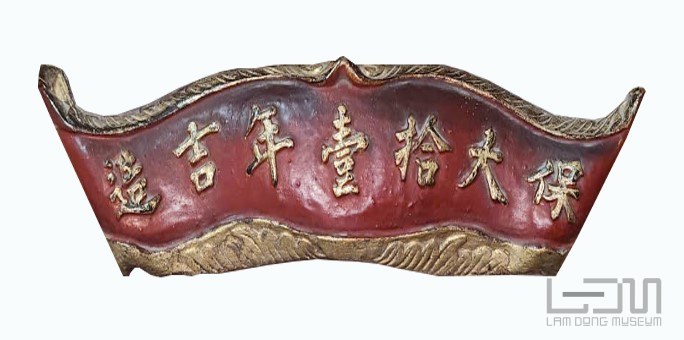
The four words on the left are: “會 成 奉 供”(Hoi Thanh Phungoffering).
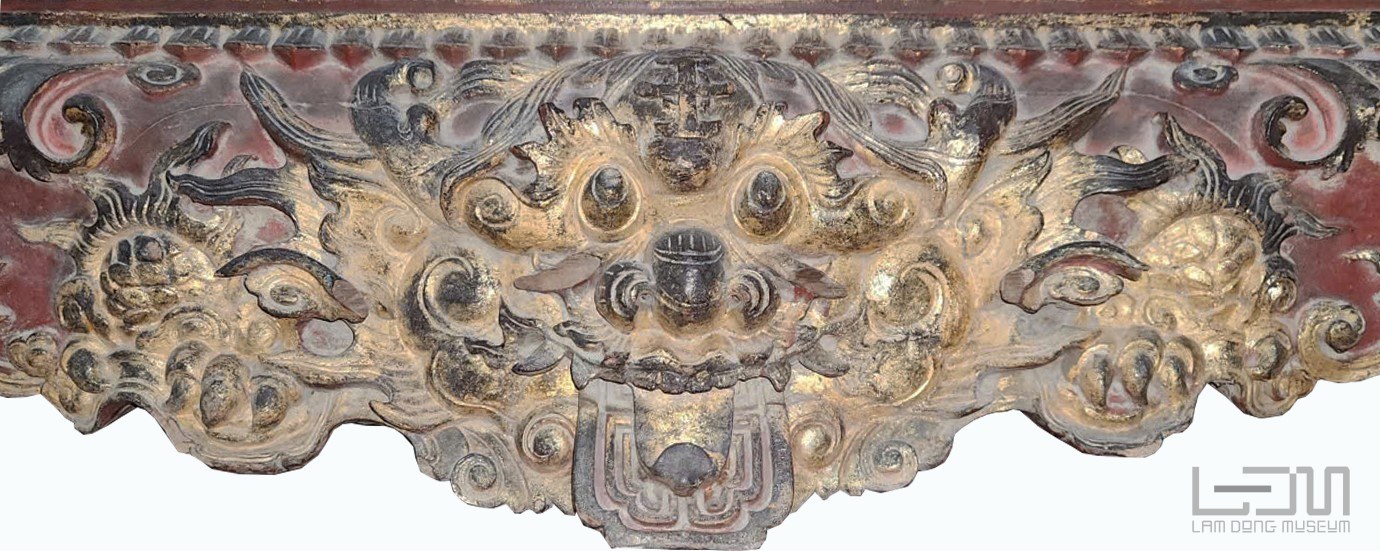
The incense canopy is the bottom horizontal part of the body, connecting the two legs and cleverly covering the underside with a decorative design of Rahu - in Vietnamese, Rahu (also known as tiger charm), with a characteristic fierce face. The four legs of the incense burner are solidly designed, decorated with a large Rahu image, symbolizing the stability of the family and lineage.
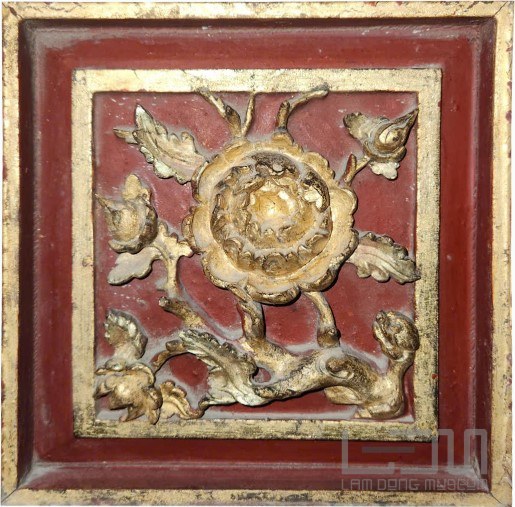
The special highlight of the incense burner is that the artisans have carved many ancient folk motifs, such as the image of a flanking dragon, four sacred animals on the front of the body, and solemn carvings of flowers, leaves, birds and animals surrounding the incense burner in a very solemn manner. After completing the woodwork, the incense burner was dressed in a coat of gilded lacquer, creating a splendid, majestic, but no less warm beauty.
Besides aesthetic value, incense burners carry extremely deep spiritual valuesharp. In the minds of Vietnamese people, the house is the residence of the living, and the incense burner is the "house" of the deceased. Every time the incense stick is lit, the deep smoke drifts out, and a spiritual bridge is established. This is where descendants express their respect and infinite gratitude for the merits of their parents and the exploits of their ancestors. It is also the place to send wishes for a peaceful, healthy and prosperous life to the family. Huong An becomes the center of all rituals, preparations for holidays are done carefully and respectfully, showing thoughtfulness and preserving family customs.
Through the ups and downs of history and the changes of modern life, the incense burner also changes to suit the new living space. However, despite changing the design and size, the essence and sacred meaning of the incense burner remains intact. This is not only a place to preserve unique spiritual and cultural beauty, but also a thread that tightens family affection through many generations, a reminder for children and grandchildren to always look towards their roots, preserve family traditions and filial piety.draft.
Nguyen Thi Hong Oanh